Sweet Pepper Slaw

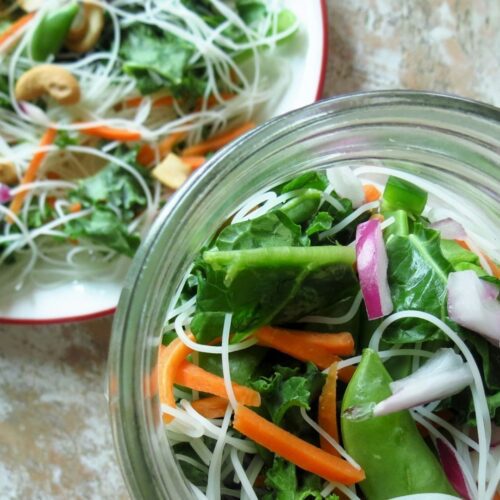
Photo of cold noodle salad from Correen from Unsplash


Sweet pepper slaw is a crisp and colorful blend of shredded cabbage and sweet peppers, dressed in a tangy vinaigrette for a refreshing side dish. This slaw shines in late summer when bell peppers are at their sweetest and most abundant, providing a vibrant array of colors and a natural sweetness. The crunchy texture of the cabbage combined with the tender peppers creates a delightful contrast, while the tangy vinaigrette adds a zesty kick. Perfect for picnics and barbecues, sweet pepper slaw complements a variety of main dishes and brings a burst of garden-fresh flavor to your plate.

These recipes are brought to you through a collaboration with Vetri Community Partnership, a Philadelphia-based nonprofit that nourishes minds, bodies, and communities with nutrition education through cooking. Through hands-on cooking classes and creative demonstrations, Vetri Community Partnership is inspiring people across Philadelphia and Camden to build their culinary confidence through hands-on education. Backyard Eats is proud to partner with Vetri Community Partnership to bring you some of the same nutritious, delicious recipes that they teach in the culinary classroom.

If you also feel passionately about ensuring that everyone has the knowledge and skills in order to find joy in cooking, you belong at Vetri Community Partnership. Take a moment to learn more about how to support their work here.

Photo of cold noodle salad from Correen from Unsplash

Sweet Pepper Slaw

Vetri Community Parnership
Sweet pepper slaw is a crisp and colorful blend of shredded cabbage and sweet peppers, dressed in a tangy vinaigrette for a refreshing side dish.
Prep Time 10 minutes
Course Side Dish
Servings 6

Ingredients
  

For the Salad

  • 3-4 bell peppers various colors, sliced thin
  • 1/4 head cabbage (green or red) sliced thin
  • 2 cucumbers sliced thin
  • 1 bunch scallions chopped small
  • 1/2 red onion sliced thin

For the Vinaigrette

  • 1/4 cup apple cider vinegar
  • 1/4 cup olive oil
  • 1 Tbsp honey or sugar
  • 1/2 tsp salt
  • 1 tsp black pepper
  • Juice of 1/2 lemon

Instructions
 

  • Combine all vinaigrette ingredients in a small bowl and whisk together until well combined (or until honey and sugar is dissolved).
  • In a large bowl, combine peppers, cabbage, cucumbers, scallions, and red onion.
  • Pour the vinaigrette over the pepper slaw and toss to combine. Taste and adjust seasoning.
  • Let sit for 5 minutes to marinate or store in the fridge for up to 3 days. Enjoy!

Notes

This recipe was originally published by Vetri Community Partnership. You can view the original recipe here.

Tatsoi Asian Greens Salad

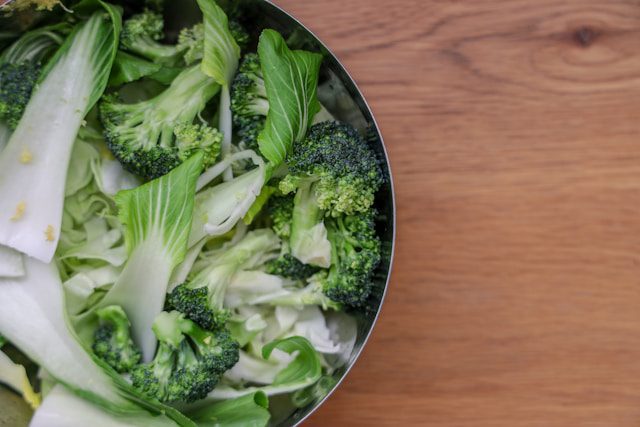
Photo of chopped bok choy and broccoli from Mor Shani from Unsplash

Enjoy the crisp freshness of tatsoi Asian greens in our vibrant salad. These tender leaves offer a delicate yet satisfying crunch, perfectly embodying the essence of spring. With every bite, savor the natural flavors of the greens, making this salad a refreshing and nutritious addition to any meal or a delightful standalone dish.

Photo of chopped bok choy and broccoli from Mor Shani from Unsplash

Tatsoi Asian Greens Salad Recipe

ChihYu Smith
Enjoy the crisp freshness of spring with a Tatsoi Asian Greens Salad, featuring vibrant tatsoi greens tossed with a medley of Asian-inspired flavors and textures. This light and nutritious salad combines the delicate crunch of tatsoi with the boldness of ranch dressing, creating a refreshing dish that celebrates the essence of the season.
Prep Time 15 minutes
Course Salad
Servings 6 people

Ingredients
  

Whole30 Ranch Yogurt Dressing

  • 3 Tbsp mayo
  • 1 Tbsp dairy-free milk unsweetened
  • 3 Tbsp coconut yogurt or dairy-free yogurt thick texture, unsweetened
  • 1 Tbsp coconut aminos
  • Coarse sea salt and black pepper to taste

Tatsoi Salad

  • 7 oz carrots about 2 large
  • 7 oz English cucumber or mini cucumbers
  • 2.5 oz tatsoi or baby spinach
  • 2 oz mizuna or baby arugula
  • 2 oz mixed greens of choice
  • 1 Tbsp olive oil
  • Furikake or toasted sesame seeds, optional
  • Coarse sea salt to taste or Takii Umami mushroom powder to replace salt

Instructions
 

  • Mix Whole30 ranch yogurt dressing. Set it aside in the fridge until ready to use.
  • Use a vegetable peeler to shave the carrots and cucumber into ribbons.
  • Add the carrot and cucumber ribbons to a large salad bowl with tatsoi, mizuna, and more mixed baby greens.
  • Drizzle with olive oil and the salad dressing. Start with 3 Tbsp dressing at first and add more, if desired. Sprinkle with furikake, if using. Toss and season with salt to taste.
  • Serve cold and enjoy right away.

Notes

This recipe is originally by ChihYu Smith of the I Heart Umami blog.
This favorite recipe was contributed by a Backyard Eats client! She encourages home cooks to substitute ingredients as needed based their lifestyle or what's growing fresh in their garden.

Greek Salad

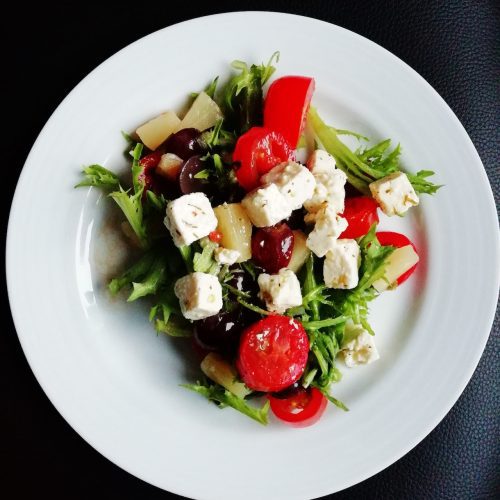
Photo of Greek salad from Lina Luoto from Pexels

Greek salad is a refreshing and flavorful dish that combines the vibrant flavors of fresh vegetables with the tanginess of feta cheese and the richness of Kalamata olives. With minimal ingredients and simple assembly, you can create a delightful salad that is both light and satisfying. The crisp cucumbers, juicy tomatoes, crunchy bell peppers, and thinly sliced red onions come together in a harmonious blend of colors and tastes. Tossed in a zesty dressing made with olive oil, lemon juice, and herbs, Greek salad offers a delightful balance of textures and a burst of Mediterranean flavors. Embrace the simplicity of making this classic salad and savor its deliciousness with every refreshing bite.

Photo of Greek salad from Lina Luoto from Pexels

Greek Salad

Love and Lemons
Greek salad offers a delightful balance of textures and a burst of Mediterranean flavors.
Prep Time 15 minutes
Cook Time 15 minutes
Total Time 30 minutes
Course Salad
Servings 4 servings

Ingredients
  

Dressing

  • 1/4 cup extra-virgin olive oil
  • 3 Tbsp red wine vinegar
  • 1 garlic clove (minced)
  • 1/2 tsp dried oregano (more for sprinkling)
  • 1/4 tsp Dijon mustard
  • 1/4 tsp sea salt
  • Freshly ground black pepper

Salad

  • 1 English cucumber (cut lengthwise, seeded, and sliced 1/4 inch thick)
  • 1 green bell pepper (chopped into 1 inch pieces)
  • 2 cups cherry tomatoes (halved)
  • 5 oz feta cheese (cut into 1/2 inch cubes)
  • 1/3 cup red onion (thinly sliced)
  • 1/3 cup pitted Kalamata olives
  • 1/3 cup fresh mint leaves

Instructions
 

  • Make the dressing: In a small bowl, whisk together the olive oil, vinegar, garlic, oregano, mustard, salt, and several grinds of pepper.
  • On a large platter, arrange the cucumber, green pepper, cherry tomatoes, feta cheese, red onions, and olives. Drizzle with the dressing and very gently toss. Sprinkle with a few generous pinches of oregano and top with the mint leaves. Season to taste and serve.

Notes

Note: Feta in brine is best for this recipe.
This recipe came from the Love and Lemons blog.

Easy Asian Cucumber Salad

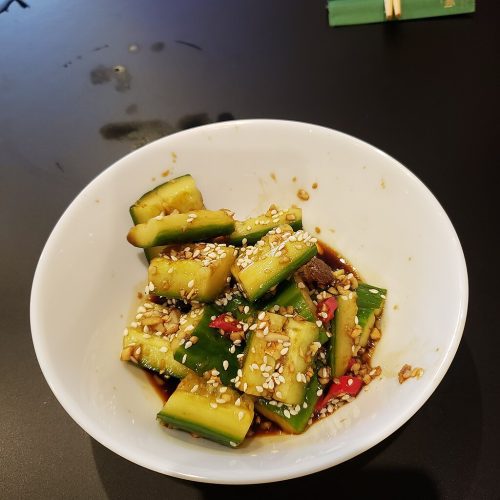
Photo of cucumber sesame salad

Asian cucumber salad is a refreshing and vibrant dish that combines the crispness of cucumbers with a tangy and savory dressing. With minimal ingredients and simple preparation, you can create a light and flavorful salad that is both satisfying and packed with Asian-inspired flavors. The combination of the cool cucumbers, tangy rice vinegar, and soy sauce creates a harmonious blend of tastes. Whether enjoyed as a refreshing side dish or a light appetizer, Asian cucumber salad offers a delightful balance of textures and a burst of refreshing flavors. Embrace the simplicity of making this flavorful salad and enjoy its refreshing taste with every bite.

Photo of cucumber sesame salad

Easy Asian Cucumber Salad

Farah from Farah J. Eats
Asian cucumber salad is a refreshing and vibrant dish that combines the crispness of cucumbers with a tangy and savory dressing.
Prep Time 25 minutes
Course Side Dish
Servings 4 servings

Ingredients
  

  • 5 Persian cucumbers
  • 1/2 tsp salt
  • 1/2 Tbsp sesame oil
  • 3/4 Tbsp light soy sauce
  • 1 Tbsp sugar
  • 3/4 Tbsp rice vinegar
  • 1 Tbsp chili oil
  • 1/2 Tbsp sesame seeds

Instructions
 

  • Rinse and slice one end of the cucumber at an angle.
  • Continue slicing at an angle. Slices should look more oval than round. Thickness should be up to preference.
  • Add to a bowl/container and sprinkle 1/2 tsp of salt.
  • Mix that well and refrigerate for at least 20 minutes to draw out the water.
  • Drain the water and give the cucumbers a quick 10 seconds rinse before returning back to the bowl/container.
  • Add sesame oil, light soy sauce, sugar, rice vinegar, chili oil and sesame seeds.
  • Stir until well combined and serve. Enjoy!

Notes

The amount of chili oil should be up to heat preference. Adjust accordingly.
Best served immediately.
This recipe is courtesy of Farah at Farah J. Eats.

Creamy Cucumber Radish Salad

Photo of harvested radishes from Kulbir from Pexels

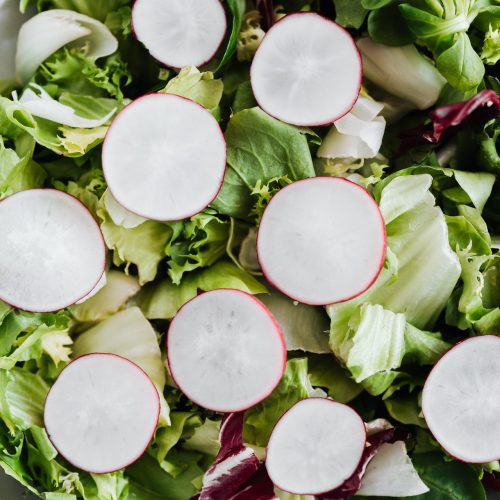
Creamy cucumber radish salad is a refreshing and delightful dish that combines the cool crunch of cucumbers with the crispness of radishes. With minimal ingredients and simple preparation, you can create a creamy and tangy salad that is both light and satisfying. The combination of the fresh cucumbers and peppery radishes creates a harmonious blend of flavors and textures. Whether enjoyed as a side dish or a refreshing snack, creamy cucumber radish salad offers a burst of freshness and a creamy dressing that complements the vegetables perfectly. Embrace the simplicity of making this flavorful salad and enjoy its refreshing taste with every bite.

Photo of salad with radishes from Wild Hearth and Home

Creamy Cucumber Radish Salad

Taesha Butler
Creamy cucumber radish salad is a refreshing and delightful dish that combines the cool crunch of cucumbers with the crispness of radishes.
Prep Time 10 minutes
Total Time 10 minutes
Course Salad
Servings 4 servings

Ingredients
  

  • 4 mini or Persian cucumbers (or 1 large English cucumber)
  • 1 bunch radishes
  • 3 Tbsp chopped fresh dill (or 2 tsp dried dill)
  • 1/4 cup chopped fresh chives (or 1/2 cup thinly sliced scallions)
  • 1/3 cup plain Greek yogurt
  • 2 Tbsp extra-virgin olive oil
  • 2 tsp red wine vinegar (or apple cider vinegar)
  • 1 tsp honey
  • 1/2 tsp kosher salt
  • 1/4 tsp garlic powder
  • Freshly ground black pepper (to taste)

Instructions
 

  • Thinly slice radishes and cucumbers using either a sharp knife or a mandolin.
  • Place thinly sliced cucumbers, radishes, dill, and chives in a large bowl. Mix to combine.
  • In a separate bowl or large liquid measuring cup, whisk together the yogurt, olive oil, vinegar, honey, salt, garlic powder, and pepper.
  • Pour dressing over the vegetables and toss to coat. Once dressing is mixed with the cucumbers, the cucumbers begin to release liquid, so the salad is best when eaten right away.
  • To make ahead, cover and store the vegetables and dressing separately in the refrigerator for up to a day. Toss with dressing, then serve.

Notes

If you are using a regular (not Persian or English) cucumber, you will want to peel it and remove some of the seeds. To remove the seeds, cut the cucumber in half lengthwise then use a spoon to scoop out some of the seeds. Discard the seeds then slice the cucumber into thin half circles.
What kind of yogurt to use: I like using a whole milk or 2% plain Greek yogurt for this recipe. However, you can use any kind of plain Greek yogurt you like. Regular yogurt will not work as well in this recipe because it has too much liquid and the dressing will not be thick enough to coat the vegetables.
Instead of yogurt, you could use sour cream or a mixture of mayonnaise and either yogurt or sour cream.
Sweetener: I like to add a touch of honey to balance out the sour flavor of the yogurt and vinegar. Instead of honey you can use white sugar or any other sweetener of your choice to taste. You can also leave it out if you prefer, but the dressing will be a little tangier.
This recipe is courtesy of Taesha Butler at The Natural Nurturer.

Tzatziki Sauce

Photo of tzatziki from Shameel Mukkath from pexels

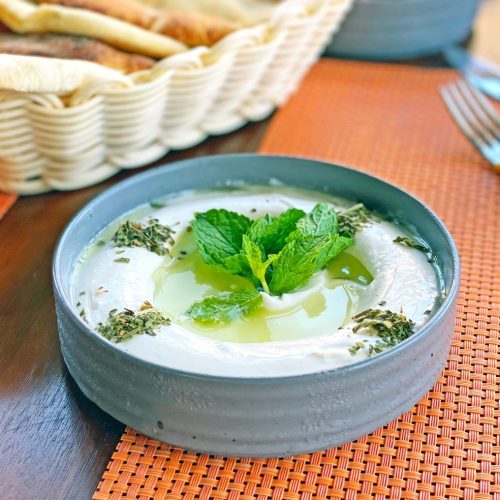
Tzatziki sauce is a refreshing and versatile condiment that adds a burst of flavor to a variety of dishes. With just a few simple ingredients, you can create a creamy and tangy sauce that complements Mediterranean flavors perfectly. The combination of creamy Greek yogurt, fresh cucumber, garlic, and dill creates a harmonious blend of flavors that is both cooling and refreshing. Whether used as a dip for pita bread, a sauce for grilled meats, or a dressing for salads, tzatziki sauce adds a delightful zing to your culinary creations. Experience the joy of making this flavorful sauce at home and elevate your dishes with its irresistible taste.

Photo of tzatziki from Shameel Mukkath from pexels

Tzatziki Sauce

Love and Lemons
With just a few simple ingredients, you can create a creamy and tangy sauce that complements Mediterranean flavors perfectly.
Prep Time 5 minutes
Course Ingredient
Servings 4 people

Ingredients
  

  • 1/2 cup cucumber (finely grated)
  • 1 cup whole milk Greek yogurt
  • 1 Tbsp lemon juice
  • 1/2 Tbsp extra-virgin olive oil
  • 1 clove garlic (grated)
  • 1/4 tsp sea salt
  • 1 Tbsp fresh dill (chopped)
  • 1 Tbsp fresh mint (chopped, optional)

Instructions
 

  • Place the cucumber on a towel and gently squeeze out a bit of the excess water.
  • In a medium bowl, combine the cucumber, yogurt, lemon juice, olive oil, garlic, salt, dill, and mint, if using.
  • Chill until ready to use.

Notes

This recipe is courtesy of Love and Lemons.

Lacto-Fermentation Recipe

Carrots in a jar ready for pickling

[et_pb_section fb_built=”1″ _builder_version=”4.21.0″ custom_margin_tablet=”|40px||40px|false|true” custom_margin_phone=”|30px||30px|false|true” custom_margin_last_edited=”on|desktop” da_disable_devices=”off|off|off” global_colors_info=”{}” da_is_popup=”off” da_exit_intent=”off” da_has_close=”on” da_alt_close=”off” da_dark_close=”off” da_not_modal=”on” da_is_singular=”off” da_with_loader=”off” da_has_shadow=”on”][et_pb_row _builder_version=”4.27.0″ _module_preset=”default” hover_enabled=”0″ global_colors_info=”{}” background_enable_color=”off” sticky_enabled=”0″][et_pb_column type=”4_4″ _builder_version=”4.21.0″ _module_preset=”default” global_colors_info=”{}”][et_pb_text _builder_version=”4.27.0″ text_text_color=”#000000″ text_font_size=”15px” text_line_height=”1.8em” global_colors_info=”{}”]

This recipe was contributed by Mordechai Schram: owner of hamutzim, ordained kosher chef, and champion of the Mt. Airy local food economy. Mordechai is enthusiastic about cooking local, seasonal, and organic food using ancient preservation methods through the lens of Jewish Diaspora and Israeli cuisine.

[/et_pb_text][/et_pb_column][/et_pb_row][et_pb_row column_structure=”3_5,2_5″ _builder_version=”4.21.0″ _module_preset=”default” width=”100%” global_colors_info=”{}”][et_pb_column type=”3_5″ _builder_version=”4.21.0″ _module_preset=”default” global_colors_info=”{}”][et_pb_text _builder_version=”4.21.0″ _module_preset=”default” text_text_color=”#000000″ text_line_height=”1.8em” global_colors_info=”{}”]

What is Lacto-Fermentation?

The process of lacto-fermentation creates an environment for naturally occurring bacteria found in vegetables to convert naturally occurring sugar into lactic acid. Lactic acid functions as a preservative and inhibits the growth of other harmful bacteria. Salt and water are the medium in which this amazing transformation takes place. In addition to its amazing taste and preservation benefits, lacto-fermentation increases the vitamin and enzyme levels of vegetables and is also high in probiotics, which are essential to good gut health.

[/et_pb_text][et_pb_text _builder_version=”4.21.0″ text_text_color=”#000000″ text_line_height=”1.8em” global_colors_info=”{}”]

Today we are sharing a lacto-fermentation recipe that’s perfect for pickling carrots, radishes, and turnips! These crunchy, tangy veggies are great on salads, sandwiches, dips, or straight out of the jar. And best of all, they’re right from your garden!

[/et_pb_text][/et_pb_column][et_pb_column type=”2_5″ _builder_version=”4.21.0″ _module_preset=”default” global_colors_info=”{}”][et_pb_image src=”https://backyard-eats.com/wp-content/uploads/2023/06/Hamutzim-Screenshot.png” title_text=”Hamutzim Screenshot” _builder_version=”4.21.0″ _module_preset=”default” border_width_all=”2px” border_color_all=”#000000″ global_colors_info=”{}”][/et_pb_image][/et_pb_column][/et_pb_row][et_pb_row _builder_version=”4.21.0″ _module_preset=”default” background_color=”gcid-3b5ac83a-684c-4379-a559-60b2aa9e8157″ width=”100%” custom_margin=”20px||20px||false|false” global_colors_info=”{%22gcid-3b5ac83a-684c-4379-a559-60b2aa9e8157%22:%91%22background_color%22%93}”][et_pb_column type=”4_4″ _builder_version=”4.21.0″ _module_preset=”default” global_colors_info=”{}”][et_pb_text _builder_version=”4.21.0″ _module_preset=”default” text_font=”|600|||||||” text_text_color=”#FFFFFF” header_font=”|600|||||||” header_text_color=”#FFFFFF” header_font_size=”36px” global_colors_info=”{}”]

Equipment

[/et_pb_text][/et_pb_column][/et_pb_row][et_pb_row _builder_version=”4.21.0″ _module_preset=”default” width=”100%” global_colors_info=”{}”][et_pb_column type=”4_4″ _builder_version=”4.21.0″ _module_preset=”default” global_colors_info=”{}”][et_pb_text _builder_version=”4.21.0″ _module_preset=”default” header_3_line_height=”2em” header_4_line_height=”1.5em” header_5_line_height=”1.5em” custom_margin=”-10px||||false|false” global_colors_info=”{}”]

At the end of the day, pickling can be as simple as submerging vegetables in salt water! You can experiment with whatever heat-safe jars you have to start; the equipment linked below will help make the process easier for fans of fermentation or large-scale production.

[/et_pb_text][et_pb_text _builder_version=”4.21.0″ _module_preset=”default” text_text_color=”#000000″ text_line_height=”1.8em” global_colors_info=”{}”]

A Mason Jar

This recipe is for a Quart Mason Jar. You can find mason jars at most grocery and hardware stores, or you can order them online.

You can adjust this recipe up or down depending on how many vegetables you have.  Double for a ½ gallon (or 2 quarts), or halve for a pint. For larger quantities, say 1 gallon or 3.5 gallons, I recommend purchasing a crock from Ohio Stoneware.

[/et_pb_text][/et_pb_column][/et_pb_row][et_pb_row column_structure=”1_2,1_2″ _builder_version=”4.21.0″ _module_preset=”default” width=”100%” custom_margin=”-20px||||false|false” global_colors_info=”{}”][et_pb_column type=”1_2″ _builder_version=”4.21.0″ _module_preset=”default” global_colors_info=”{}”][et_pb_text _builder_version=”4.21.0″ _module_preset=”default” text_text_color=”#000000″ text_line_height=”1.8em” global_colors_info=”{}”]

A Weight & Burping Lid

If you don’t have a burping lid, just remember to manually burp the jar every day. Although the weight is recommended, I have made a bunch of ferments without the weight: just make sure the water covers the top of the vegetables. Or find something around the house, perhaps a stone, that could serve the same purpose (just make sure to clean it first)

[/et_pb_text][et_pb_text _builder_version=”4.21.0″ _module_preset=”default” text_text_color=”#000000″ text_line_height=”1.8em” global_colors_info=”{}”]

A Kitchen Scale

A kitchen scale helps provide more accurate measurements based on weight (grams) instead of volume (cups). Here is one kitchen scale that you could order online.

[/et_pb_text][et_pb_text _builder_version=”4.21.0″ _module_preset=”default” global_colors_info=”{}”]

Canning Funnel

A canning funnel helps pack vegetables into mason jars, especially regular or narrow-mouth jars. Here are some examples of canning funnels that you could order online.

[/et_pb_text][/et_pb_column][et_pb_column type=”1_2″ _builder_version=”4.21.0″ _module_preset=”default” global_colors_info=”{}”][et_pb_image src=”https://backyard-eats.com/wp-content/uploads/2023/06/6x6_1_Gallon_Weights_1__02700.png” title_text=”6x6_1_Gallon_Weights_1__02700″ show_bottom_space=”off” align=”center” _builder_version=”4.21.0″ _module_preset=”default” height=”350px” custom_margin=”-40px||||false|false” global_colors_info=”{}”][/et_pb_image][et_pb_text _builder_version=”4.21.0″ _module_preset=”default” width=”75%” module_alignment=”center” global_colors_info=”{}”]

I recommend buying a dedicated fermentation weight if you plan to do a lot of pickling. You can also buy a fermentation kit, such as this one from Cultures For Health.

[/et_pb_text][/et_pb_column][/et_pb_row][et_pb_row _builder_version=”4.21.0″ _module_preset=”default” background_color=”gcid-3b5ac83a-684c-4379-a559-60b2aa9e8157″ width=”100%” custom_margin=”20px||20px||false|false” global_colors_info=”{%22gcid-3b5ac83a-684c-4379-a559-60b2aa9e8157%22:%91%22background_color%22,%22background_color%22%93}”][et_pb_column type=”4_4″ _builder_version=”4.21.0″ _module_preset=”default” global_colors_info=”{}”][et_pb_text _builder_version=”4.21.0″ _module_preset=”default” text_font=”|600|||||||” text_text_color=”#FFFFFF” header_font=”|600|||||||” header_text_color=”#FFFFFF” header_font_size=”36px” global_colors_info=”{}”]

Ingredients

[/et_pb_text][/et_pb_column][/et_pb_row][et_pb_row _builder_version=”4.21.0″ _module_preset=”default” width=”100%” custom_padding=”||0px||false|false” global_colors_info=”{}”][et_pb_column type=”4_4″ _builder_version=”4.21.0″ _module_preset=”default” global_colors_info=”{}”][et_pb_text _builder_version=”4.21.0″ _module_preset=”default” text_text_color=”#000000″ text_line_height=”1.8em” header_6_line_height=”1.5em” global_colors_info=”{}”]

1-1.25 lb Radish, Carrot, and/or Turnip
425 grams of Water (about 2 cups)
  • Depending on how much veggies and other ingredients you use, there may be some leftover brine. Better to have more than less, and you can keep the extra brine in the fridge in a mason jar to use for the next batch.
13 grams Celtic and/or Himalayan Sea Salt (3% Salinity)
  • Celtic and Himalayan salts have the best flavor, and they contain the rich mineral and trace elements naturally occurring in salt.
  • When measuring salt and water use weight instead of volume, as it is more precise. This recipe calls for a 3% Salinity.  13 grams of salt is 3% of 425 grams of water.
1-2 Bay Leaves
  • Bay leaves have tannins which are good for naturally preserving the crunch of your ferments.
Optional Additions
  • A splash of Raw Unfiltered Apple Cider Vinegar (e.g.: Bragg’s). Just a splash as too much vinegar will impede the lacto-fermentation process
  • A few Cloves of Garlic (Especially for Carrots)
  • A few slices of Fresh Ginger (Especially for Carrots)
  • A few slices of Onion
  • Star Anise

[/et_pb_text][et_pb_cta title=”Spice Ideas” button_text=”Spices for Cucumbers” _builder_version=”4.27.0″ _module_preset=”default” body_font_size=”15px” background_color=”gcid-c8781551-ca60-42c8-ba6c-c1e000785908″ custom_margin=”0px||0px||false|false” custom_padding=”40px||20px||false|false” global_colors_info=”{%22gcid-c8781551-ca60-42c8-ba6c-c1e000785908%22:%91%22background_color%22%93}”]

 
For cucumbers I use a different spice mix than for radishes or carrots.
Try a shake of yellow & brown mustard seed, coriander seed, and black & white pepper. Add a pinch of allspice, clove, or juniper berry. Or stick with a classic bay leaf, a few sprigs of fresh dill, and garlic!

[/et_pb_cta][/et_pb_column][/et_pb_row][et_pb_row column_structure=”1_3,1_3,1_3″ _builder_version=”4.21.0″ _module_preset=”default” width=”100%” global_colors_info=”{}”][et_pb_column type=”1_3″ _builder_version=”4.21.0″ _module_preset=”default” global_colors_info=”{}”][et_pb_image src=”https://backyard-eats.com/wp-content/uploads/2023/05/pickles.jpeg” title_text=”pickles” _builder_version=”4.21.0″ _module_preset=”default” width_tablet=”50%” width_phone=”50%” width_last_edited=”on|tablet” module_alignment=”center” global_colors_info=”{}”][/et_pb_image][/et_pb_column][et_pb_column type=”1_3″ _builder_version=”4.21.0″ _module_preset=”default” global_colors_info=”{}”][et_pb_image src=”https://backyard-eats.com/wp-content/uploads/2023/04/29_crop.jpg” title_text=”29_crop” _builder_version=”4.21.0″ _module_preset=”default” width_tablet=”50%” width_phone=”50%” width_last_edited=”on|tablet” module_alignment_tablet=”center” module_alignment_phone=”center” module_alignment_last_edited=”on|tablet” global_colors_info=”{}”][/et_pb_image][/et_pb_column][et_pb_column type=”1_3″ _builder_version=”4.21.0″ _module_preset=”default” global_colors_info=”{}”][et_pb_image src=”https://backyard-eats.com/wp-content/uploads/2023/04/Untitleddesign17.jpg” title_text=”Untitled+design+(17)” _builder_version=”4.21.0″ _module_preset=”default” width_tablet=”50%” width_phone=”50%” width_last_edited=”on|tablet” module_alignment_tablet=”center” module_alignment_phone=”center” module_alignment_last_edited=”on|tablet” global_colors_info=”{}”][/et_pb_image][/et_pb_column][/et_pb_row][et_pb_row _builder_version=”4.21.0″ _module_preset=”default” background_color=”gcid-3b5ac83a-684c-4379-a559-60b2aa9e8157″ width=”100%” custom_margin=”20px||20px||false|false” global_colors_info=”{%22gcid-3b5ac83a-684c-4379-a559-60b2aa9e8157%22:%91%22background_color%22,%22background_color%22,%22background_color%22%93}”][et_pb_column type=”4_4″ _builder_version=”4.21.0″ _module_preset=”default” global_colors_info=”{}”][et_pb_text _builder_version=”4.21.0″ _module_preset=”default” text_font=”|600|||||||” text_text_color=”#FFFFFF” header_font=”|600|||||||” header_text_color=”#FFFFFF” header_font_size=”36px” global_colors_info=”{}”]

Recipe Directions

[/et_pb_text][/et_pb_column][/et_pb_row][et_pb_row _builder_version=”4.21.0″ _module_preset=”default” width=”100%” custom_margin=”-5px||||false|false” global_colors_info=”{}”][et_pb_column type=”4_4″ _builder_version=”4.21.0″ _module_preset=”default” global_colors_info=”{}”][et_pb_text _builder_version=”4.21.0″ _module_preset=”default” text_text_color=”#000000″ text_line_height=”1.8em” header_6_line_height=”1.5em” global_colors_info=”{}”]

Veggie Prep

  1. Wash and trim the vegetables. Keep the skins on! Depending on the size of your vegetables, you can choose to pickle them whole or slice them to fit your jar.
  2. For Radish and Turnip: slice by hand. For quicker and more consistent results, use a mandolin or the slicing attachment on your food processor or stand mixer. The slices should be about a ¼ inch thick. If using a mandolin, be very careful because they are super sharp. I recommend using a chain mail glove to protect your hand.
  3. For Carrots: cut into julienne (thin strips).

Salt Brine

  1. Using a kitchen scale set to grams, place your jar on the scale and tare – meaning bring the weight to “0” with the jar on the scale.
  2. Fill the jar until you get to 425 grams.
  3. Tare the scale again and add the 13g of salt. (A few grams more is fine too.)
  4. Cover the jar and give it a good shake to help the salt dissolve. 

Assembly

  1.  In a quart jar alternately add your vegetables, bay leaf, and any other veggies/spices.
  2. Add the brine. Leave a little room on top for the water that will exude from the veggies and cover. You may have some leftover brine if you add some extra ingredients.  

Stewardship

  1. Let the ferments sit anywhere from 5-10 days. The longer you ferment the tangier and more probiotic the pickles will become.
  2. If you don’t have a burping lid, open and close the jar once or twice a day depending on how much “action” you start to get.  As you see bubbling in the liquid you will know that fermentation is happening.
  3. Taste along the way, and when the veggies taste good to you, store them in the fridge for 4-6 months.

[/et_pb_text][/et_pb_column][/et_pb_row][et_pb_row _builder_version=”4.27.0″ _module_preset=”default” background_color=”#88667B” width=”100%” global_colors_info=”{}”][et_pb_column type=”4_4″ _builder_version=”4.21.0″ _module_preset=”default” global_colors_info=”{}”][et_pb_text _builder_version=”4.27.0″ _module_preset=”default” text_font=”|600|||||||” text_text_color=”#FFFFFF” text_font_size=”15px” global_colors_info=”{}”]

For more information on traditional fermentation practices, you can find Mordechai Schram at hamutzim.com

[/et_pb_text][/et_pb_column][/et_pb_row][/et_pb_section]

Quick Pickle Recipe

Pickled cucumbers in a glass jar

“Abundance is not something we acquire. It is something we tune into.”
– Wayne Dyer

I love a good mindset shift – an idea that only requires you to think differently about a problem or something you want, that unlocks your potential in an instant – even if true change takes time. I also love pickles.

That’s what makes this quote from Wayne Dyer perfectly pertinent to quick pickling. Contrary to popular belief, pickling isn’t just for cucumbers! You can turn many vegetables from the spring garden into crisp, tangy snacks such as turnips and radishes. Quick pickles make a fun addition to salads, sandwiches, tacos, and more.

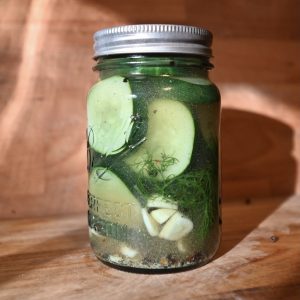
Unlike traditional canning, quick pickles are as fast and easy to make as boiling water and pouring it over a few ingredients in a glass jar. For best results, use the freshest vegetables. Keep reading to learn what herbs and spices you can add to enhance your veggies’ flavor! Soon you’ll have delicious snacks to share with friends and family.


Pickled cucumbers in a glass jar

Quick Pickle Recipe

Founder
Unlike traditional canning, quick pickles are as fast and easy to make as boiling water and pouring it over a few ingredients in a glass jar.
Prep Time 10 minutes
Cook Time 0 minutes
Resting Time 1 day
Total Time 1 day 10 minutes
Course Side Dish, Snack

Equipment

  • 1 quart mason jar (or any heat-proof container that you can pour boiling water into)

Ingredients
  

Pickling Ingredients

  • 1 pound fresh vegetables (sliced)
  • 2 cloves garlic (smashed)
  • 2 tsp whole peppercorns (you can also use coriander and/or mustard seeds)
  • 1-2 sprigs fresh herbs (e.g. thyme, dill, and or/rosemary)

Brine Ingredients

  • 1 cup vinegar (white, apple cider, or rice vinegar)
  • 1 cup water
  • 1 Tbsp kosher salt
  • 1 Tbsp sugar

Instructions
 

  • Wash jar(s) with soap and hot water and let dry.
  • Thinly slice fresh vegetables into bite-sized pieces. Smash 2 cloves of garlic with the flat side of a knife, or the clean heel of your hand.
  • Pack vegetables, garlic, spices, and herbs into a mason jar, leaving at least 1/2” of "breathing room" at the top.
  • Put the brine ingredients in a saucepan over medium heat. Stir to dissolve ingredients, and bring to a boil.
  • Pour the hot brine into the jar(s), still leaving at least 1/2” room at the top.
  • Tap the side of the jar(s) to remove any air bubbles.
  • Let the jar(s) cool to room temperature before refrigerating. Wait 24-48 hours before eating for the best flavor.

Notes

Depending on how carefully these quick pickles are prepared and stored, they may last up to 2 months in the refrigerator. They are not fully preserved, however, and so they cannot be stored unrefrigerated or stored indefinitely.