[et_pb_section fb_built=”1″ admin_label=”section” _builder_version=”4.21.0″ custom_padding=”||0px||false|false” da_disable_devices=”off|off|off” global_colors_info=”{}” da_is_popup=”off” da_exit_intent=”off” da_has_close=”on” da_alt_close=”off” da_dark_close=”off” da_not_modal=”on” da_is_singular=”off” da_with_loader=”off” da_has_shadow=”on”][et_pb_row _builder_version=”4.21.0″ _module_preset=”default” custom_padding=”||0px||false|false” global_colors_info=”{}”][et_pb_column type=”4_4″ _builder_version=”4.21.0″ _module_preset=”default” global_colors_info=”{}”][et_pb_blurb title=”Get The Most Out of Your Plum and Roma Tomatoes from Backyard Eats” use_icon=”on” font_icon=”||fa||900″ icon_color=”#755065″ icon_placement=”left” content_max_width=”1100px” _builder_version=”4.21.0″ _module_preset=”default” header_level=”h2″ header_font=”Poppins||||||||” header_text_align=”left” header_text_color=”#000000″ header_font_size=”26px” body_font=”Roboto||||||||” body_text_color=”#000000″ body_line_height=”2em” custom_padding=”||0px|||” global_colors_info=”{}”][/et_pb_blurb][/et_pb_column][/et_pb_row][et_pb_row _builder_version=”4.21.0″ _module_preset=”default” custom_margin=”15px||-20px||false|false” custom_margin_tablet=”15px||-20px||false|false” custom_margin_phone=”15px||-20px||false|false” custom_margin_last_edited=”on|phone” global_colors_info=”{}”][et_pb_column type=”4_4″ _builder_version=”4.21.0″ _module_preset=”default” global_colors_info=”{}”][/et_pb_column][/et_pb_row][et_pb_row module_id=”harvest-instructions” _builder_version=”4.21.0″ _module_preset=”default” custom_padding=”30px|25px|25px|25px|false|true” border_width_all=”2px” global_colors_info=”{}”][et_pb_column type=”4_4″ _builder_version=”4.21.0″ _module_preset=”default” global_colors_info=”{}”][et_pb_text _builder_version=”4.21.0″ _module_preset=”default” text_text_color=”#000000″ header_text_color=”#000000″ custom_padding=”1px||0px|||” global_colors_info=”{}”]
Harvesting Plum and Roma Tomatoes
[/et_pb_text][et_pb_text _builder_version=”4.21.0″ _module_preset=”default” text_text_color=”#000000″ header_text_color=”#000000″ custom_padding=”1px||0px|||” global_colors_info=”{}”]
When It’s Ready
- Tomatoes can be harvested any time after the appearance of orange or yellow coloring on the blossom end (bottom).
- Harvest at this stage and bring inside where it will be protected from critters, insects, and excessive rain.
When It’s Too Late
- Excessive rainfall may cause ripening or ripe tomatoes to split, which is one reason we recommend harvesting before ripening.
- Overripe tomatoes will begin to fall from their vine, or be easily smashed with light pressure.
How To
- Tomatoes can usually be pulled with one hand to remove from the vine.
[/et_pb_text][/et_pb_column][/et_pb_row][et_pb_row _builder_version=”4.21.0″ _module_preset=”default” custom_margin=”9px||||false|false” global_colors_info=”{}”][et_pb_column type=”4_4″ _builder_version=”4.20.4″ _module_preset=”default” global_colors_info=”{}”][et_pb_text _builder_version=”4.20.4″ _module_preset=”default” text_text_color=”#000000″ header_text_color=”#000000″ custom_padding=”1px||0px|||” global_colors_info=”{}”]
Growing Plum and Roma Tomatoes
[/et_pb_text][et_pb_text _builder_version=”4.21.0″ _module_preset=”default” text_text_color=”#000000″ header_text_color=”#000000″ custom_padding=”1px||0px|||” global_colors_info=”{}”]
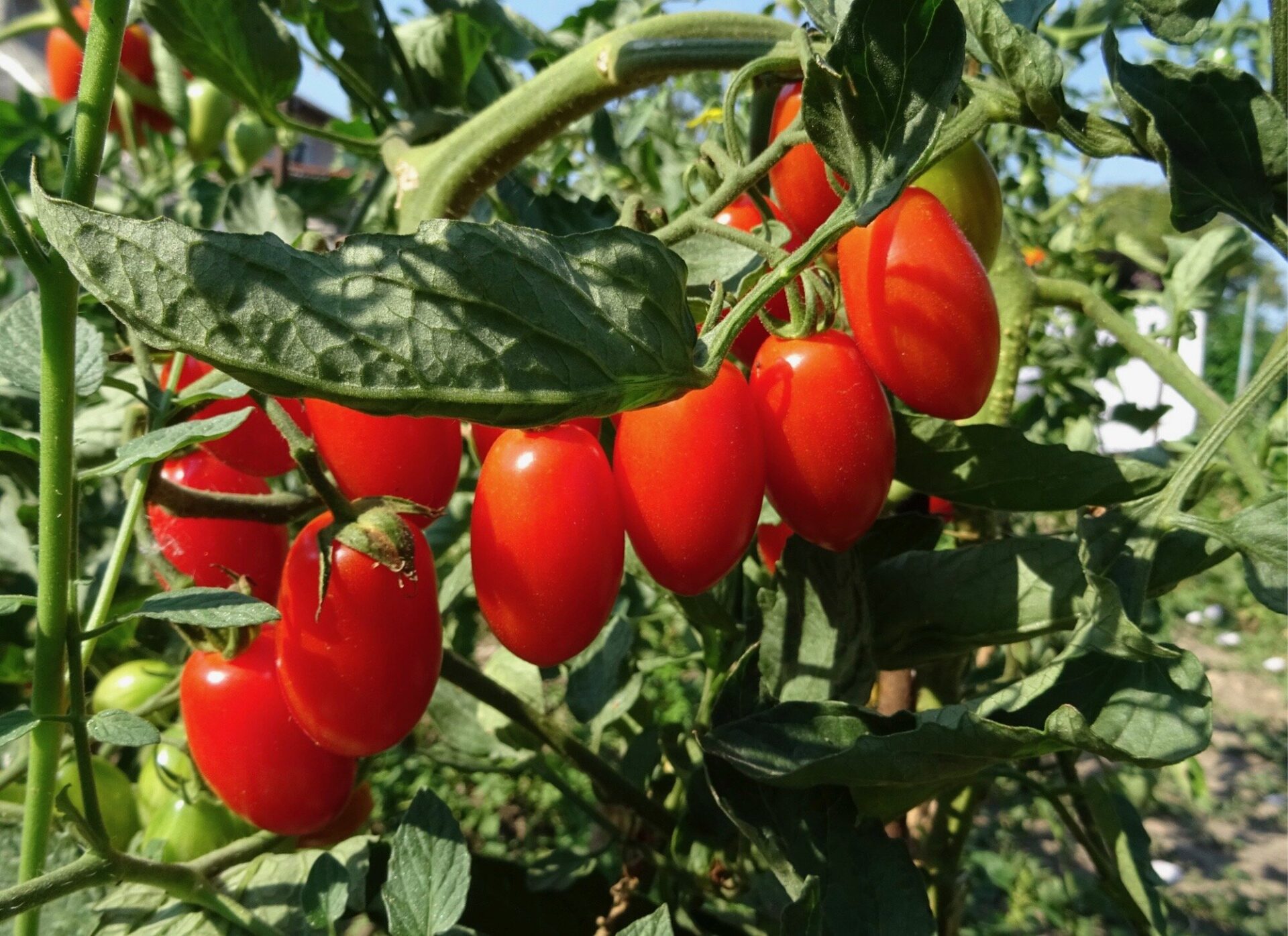
Plum tomatoes, also known as Roma tomatoes, are an oval-shaped tomato variety with a firm texture and a rich, tangy flavor. They are commonly used in Italian and Mediterranean cuisines and are often used in sauces, soups, and stews. Plum tomatoes are typically used in cooked dishes rather than raw, as they have a thick skin and meaty flesh that holds up well to cooking. They are often roasted, sautéed, or simmered to bring out their intense flavor.
[/et_pb_text][et_pb_text _builder_version=”4.21.0″ _module_preset=”default” text_font=”Poppins|500|on||||||” text_text_color=”#FFFFFF” background_color=”#bfbfbf” text_orientation=”center” background_layout=”dark” module_alignment=”center” custom_padding=”20px|20px|15px|20px|false|true” custom_padding_tablet=”20px|20px|20px|20px|true|true” custom_padding_phone=”20px|10px|5px|10px|false|false” custom_padding_last_edited=”on|phone” global_colors_info=”{}”]
Varieties of Plum and Roma Tomatoes
Grape Tomato ‘Red Pearl’ | Paste Tomato ‘Plum Regal’ | Roma Tomato ‘San Marzano’
[/et_pb_text][/et_pb_column][/et_pb_row][et_pb_row column_structure=”3_5,2_5″ _builder_version=”4.21.0″ _module_preset=”default” global_colors_info=”{}”][et_pb_column type=”3_5″ _builder_version=”4.21.0″ _module_preset=”default” global_colors_info=”{}”][et_pb_text _builder_version=”4.21.0″ _module_preset=”default” text_text_color=”#000000″ header_text_color=”#000000″ custom_padding=”1px||0px|||” global_colors_info=”{}”]
Storing Plum and Roma Tomatoes
[/et_pb_text][et_pb_text _builder_version=”4.21.0″ _module_preset=”default” text_text_color=”#000000″ header_text_color=”#000000″ custom_padding=”1px||0px|||” global_colors_info=”{}”]
- Wash tomatoes, remove any stems.
- For unripe tomatoes, place upside down on the counter until ripe (no sun required).
- For fully ripe tomatoes, refrigerate for up to 3 days to preserve. Allow to come to room temperature before serving (you may slice upon removal from the refrigerator to speed up the warming process).
- Partially damaged or rotten tomatoes can be used in sauces if the damaged portion is completely removed.
[/et_pb_text][/et_pb_column][et_pb_column type=”2_5″ _builder_version=”4.21.0″ _module_preset=”default” global_colors_info=”{}”][et_pb_image src=”@ET-DC@eyJkeW5hbWljIjp0cnVlLCJjb250ZW50IjoicG9zdF9mZWF0dXJlZF9pbWFnZSIsInNldHRpbmdzIjp7fX0=@” show_bottom_space=”off” _builder_version=”4.21.0″ _dynamic_attributes=”src” _module_preset=”default” custom_margin_tablet=”” custom_margin_phone=”20px||||false|false” custom_margin_last_edited=”on|desktop” global_colors_info=”{}”][/et_pb_image][/et_pb_column][/et_pb_row][et_pb_row _builder_version=”4.21.0″ _module_preset=”default” global_colors_info=”{}”][et_pb_column type=”4_4″ _builder_version=”4.21.0″ _module_preset=”default” global_colors_info=”{}”][et_pb_text _builder_version=”4.21.0″ _module_preset=”default” text_text_color=”#000000″ header_text_color=”#000000″ global_colors_info=”{}”]
Cooking With Plum and Roma Tomatoes
[/et_pb_text][et_pb_text _builder_version=”4.21.0″ _module_preset=”default” text_text_color=”#000000″ header_text_color=”#000000″ custom_padding=”1px||0px|||” global_colors_info=”{}”]
- Tomato Sauce: Paste tomatoes, such as Roma or San Marzano, are perfect for making rich and flavorful tomato sauce. Simmer the peeled and seeded tomatoes with garlic, onions, herbs, and a touch of olive oil for a delicious homemade sauce.
- Caprese Skewers: Skewer bite-sized pieces of paste tomatoes, fresh mozzarella, and basil leaves. Drizzle with balsamic glaze and a sprinkle of salt and pepper for a simple and elegant appetizer.
- Tomato Bruschetta: Dice paste tomatoes and mix them with minced garlic, chopped basil, olive oil, salt, and pepper. Spoon the mixture onto toasted baguette slices for a tasty and vibrant bruschetta.
- Tomato and Cucumber Salad: Combine diced paste tomatoes with diced cucumbers, red onions, and a simple vinaigrette dressing. Toss in some fresh herbs like basil or parsley for a refreshing and colorful salad.
- Roasted Tomato Salsa: Roast halved paste tomatoes along with garlic cloves, jalapeños, and onions until they are soft and slightly caramelized. Blend the roasted vegetables with lime juice, cilantro, and salt for a smoky and flavorful salsa.
[/et_pb_text][et_pb_button button_url=”#harvest-instructions” button_text=”Back To Harvest Instructions” _builder_version=”4.21.0″ _module_preset=”default” button_text_size=”18px” button_text_color=”#FFFFFF” button_bg_color=”#8E647C” custom_margin=”||40px||false|false” global_colors_info=”{}”][/et_pb_button][/et_pb_column][/et_pb_row][/et_pb_section][et_pb_section fb_built=”1″ _builder_version=”4.21.2″ _module_preset=”default” global_colors_info=”{}” theme_builder_area=”post_content” da_is_popup=”off” da_exit_intent=”off” da_has_close=”on” da_alt_close=”off” da_dark_close=”off” da_not_modal=”on” da_is_singular=”off” da_with_loader=”off” da_has_shadow=”on” da_disable_devices=”off|off|off”][et_pb_row _builder_version=”4.21.2″ _module_preset=”default” custom_margin=”||-200px|0px|false|false” global_colors_info=”{}” theme_builder_area=”post_content”][et_pb_column type=”4_4″ _builder_version=”4.21.2″ _module_preset=”default” global_colors_info=”{}” theme_builder_area=”post_content”][et_pb_text _builder_version=”4.21.2″ _module_preset=”default” hover_enabled=”0″ global_colors_info=”{}” theme_builder_area=”post_content” sticky_enabled=”0″]
Try These Plum and Roma Tomato Recipes:
[/et_pb_text][/et_pb_column][/et_pb_row][/et_pb_section]